
For traditional manufacturers, industrial distributors, and enterprise brand leaders, delaying digital modernization is no longer a conservative risk-mitigation tactic—it is an active threat to market share. The bottom line: A successful B2B E-Commerce Transformation requires dismantling the three pillars of boardroom inertia: fear of channel conflict with existing distributors, anxiety over multi-million dollar monolithic ERP failures, and complacency around long-standing offline sales relationships. By adopting a modern, modular, and open-source platform like Odoo 19, enterprise organizations can bypass the massive capital expenditures of legacy giants (such as SAP and Oracle), protect distributor relations through secure portals, and future-proof their legacy sales channels.
Key Takeaways
| Obstacle to Modernization | Root Boardroom Fear | Strategic Solution | Expected C-Suite Outcome |
| Channel Conflict | Alienating traditional distributors and reps | Segmented dealer portals with custom pricing tiers | Preserves offline partnerships while capturing digital efficiency |
| Monolithic ERP Failure | High upfront CapEx and multi-year implementation risks | Modular, agile implementation utilizing Odoo ERP | Lowers initial investment, accelerates time-to-market, and simplifies integrations |
| Complacency & Relationship Bias | "Our relationship-based sales model works fine" | Empowering sales reps with digital client insights | Transforms reps from order-takers to strategic account consultants |
Dismantling the "Boardroom Bottleneck": Resolving Channel Conflict
The most frequent friction point in executive boardrooms when discussing B2B E-Commerce Transformation is the fear of alienating established distribution networks. Board members often worry that a direct digital sales channel will be perceived as a hostile move to bypass long-standing distributor networks.
This concern is a classic symptom of the boardroom bottleneck, where strategic e-commerce mistakes erode operating margins by viewing digital channels as purely zero-sum competition.
In reality, a modern digital commerce portal does not replace distributors; it empowers them. By deploying customized buyer portals with pre-negotiated contracts, bulk discounting, and tiered customer pricing, legacy networks can execute orders 24/7. Moving routine, low-margin transactions to self-service portals frees up your top sales reps to focus on strategic account growth. This balanced approach is crucial for any successful D2C pivot and legacy sales channel evolution.
Escaping the Legacy Tech Trap: Why Monolithic CapEx is Outdated
Historically, the C-suite associated enterprise digital transformation with multi-million dollar software investments and high implementation risks. CFOs remember the painful, multi-year rollouts of monolithic legacy ERPs that went over budget and failed to deliver their promised ROI.
This financial anxiety is completely justified. However, the enterprise software ecosystem has evolved. The era of rigid, high-risk IT rollouts is over, replaced by flexible, open-source ERP platforms.4
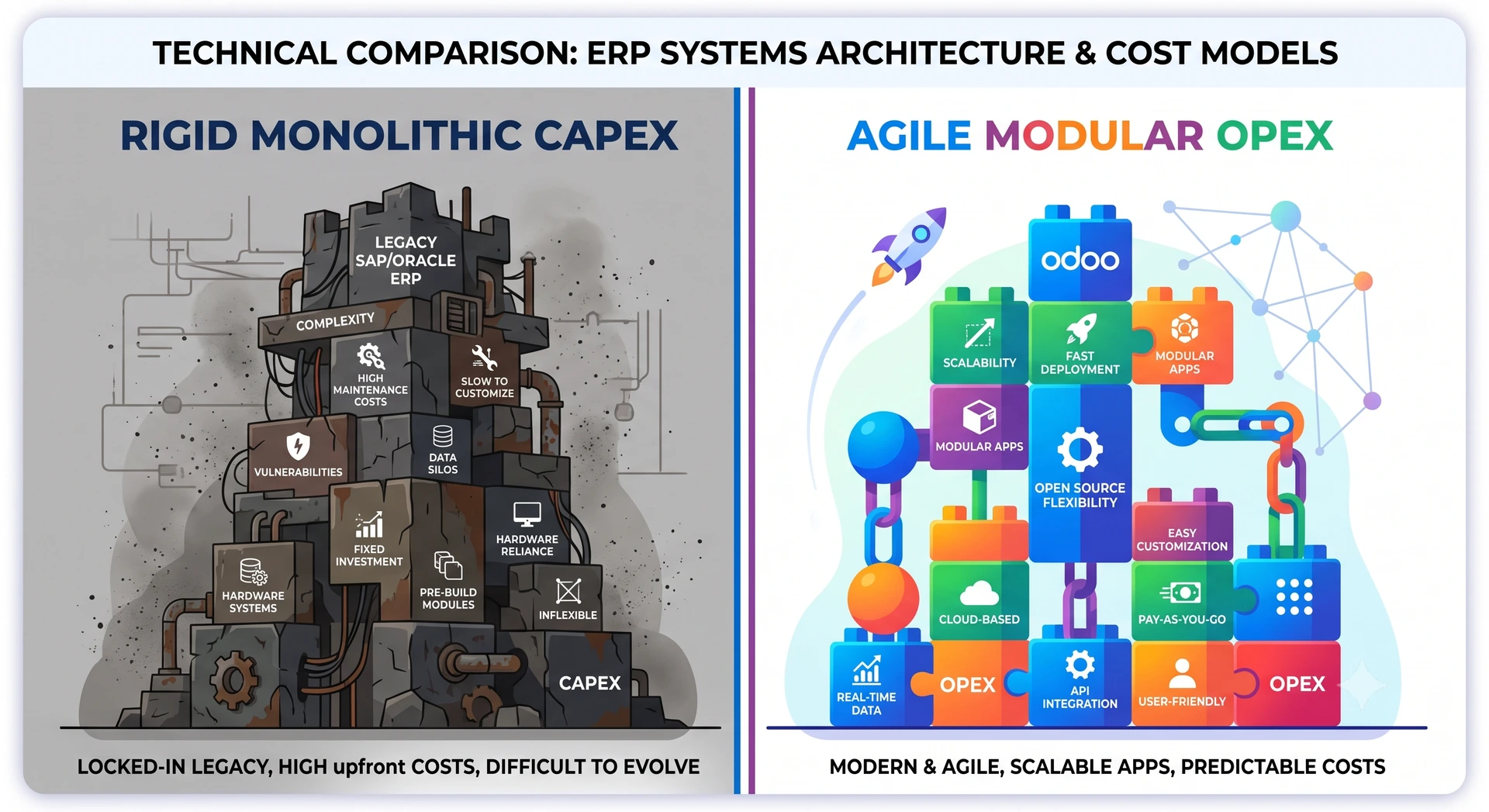
When evaluating total cost of ownership (TCO), modern, modular architectures allow enterprise companies to pay only for the modules they need today (such as inventory, sales, and e-commerce portals) and scale as they grow. To understand the financial contrast, see our in-depth analysis of Odoo vs. SAP vs. Oracle: A CFO’s Guide to Total Cost of Ownership (TCO). By utilizing a highly flexible, open-source framework, firms can lower upfront licensing costs, minimize integration friction, and bypass the traditional high-risk implementation trap.
From Order-Takers to Advisors: Modernizing the Sales Force
The final pillar of boardroom inertia is the belief that B2B purchases are too relationship-dependent to be digitized. While personal relationships remain highly valuable, relying on manual data entry, phone calls, and email threads for routine restocking is inefficient and prone to errors.
Today’s B2B buyers—most of whom are digital natives—expect the same seamless purchasing experience at work that they enjoy as consumers. They want real-time stock visibility, immediate shipping estimates, and instant order tracking.
Modernizing legacy sales channels does not eliminate human interaction. Instead, it redefines the role of your field sales reps. With a modern portal handling routine orders, sales teams can leverage integrated CRM data to spot buying trends, proactively pitch bulk packages, and resolve complex client challenges, transforming themselves from order-takers into strategic advisors.

FAQ
How can a B2B company launch e-commerce without causing distributor channel conflict?
Launch segmented distributor portals rather than open public storefronts. Provide distributors with custom, pre-negotiated pricing, exclusive bulk quantities, and real-time inventory tools. This keeps your dealer network engaged, increases their ordering efficiency, and turns your e-commerce portal into a value-add service rather than competition.
Why is a modular ERP system like Odoo a lower financial risk than SAP or Oracle?
Legacy ERP platforms require massive upfront license fees, specialized consultants, and rigid customization timelines. A modular platform like Odoo allows companies to start small, deploying only the e-commerce and inventory modules needed immediately. This significantly reduces upfront capital expenditure, speeds up time-to-value, and minimizes deployment risk.
How do we convince our sales representatives that an e-commerce platform won't replace them?
Emphasize that the portal removes administrative burdens, like manual order processing and checking stock levels. Show sales teams how the platform's customer insights can help them identify bulk sales opportunities, cross-sell relevant inventory, and focus on high-margin strategic accounts, ultimately increasing their commissions.
Written by Wassim Bedwani — CEO & Founder, GE for Trading. Expert in Automotive Lubricants and Part Distribution.
Secure Your Strategic Advantage: The C-Suite Digital Playbook
Don't let boardroom inertia dictate your organization's digital future. Join our exclusive newsletter to receive forward-thinking insights designed specifically for enterprise leaders.
Get a first look at our expert analysis of emerging B2B commerce trends, CFO-friendly technology breakdowns (including deep dives into Odoo 19 capabilities), and risk-mitigation strategies for modernizing legacy sales channels.